Roof repair in Courtenay and the Comox Valley is mostly a moss and rain story, because moss holds water against the covering and hides broken tabs. Needles and leaves do the same job in a gutter, which is why drainage has its own page. Wind matters most where the water is open, which is the Comox harbour side, and where a slope faces a storm instead of a tree. A roofer can see that. A website cannot score it.
The snow table that does not travel
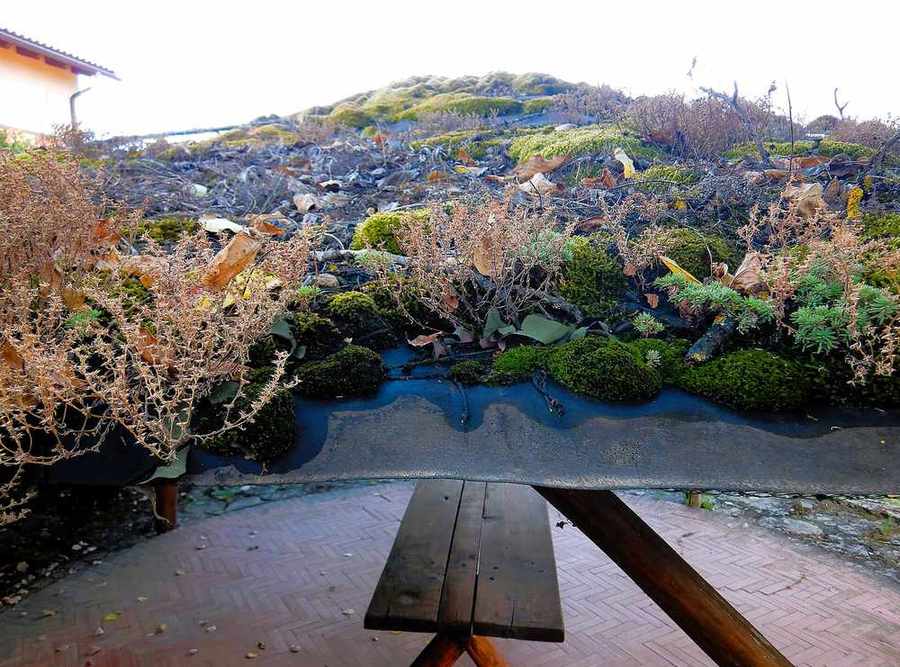
Moss and plant debris on a low roof surface. Illustration only, not a photo of a Courtenay roofing job.
The numbers behind the moss
Environment and Climate Change Canada's 1981 to 2010 normals for the Comox Airport station give 1,153.6 millimetres of precipitation in a year, with 1,096.5 millimetres as rain and 55.0 centimetres as snowfall. That is a wet climate, and it means a shaded slope can stay damp for most of the year. Moss thrives on that damp.
Wind and water in different corners of the valley
The harbour side of Comox gets open-water wind, and so do shoreline streets along Baynes Sound. In those spots, lifted tabs and ridge caps are common after a storm. Streets under tall trees trade wind for shade, debris and slow, steady damp. A roofer who works the valley will often ask which side of a house faces the weather.
What helps a roof last in this climate
Trim branches back from the slope so sun and air can dry it.
Keep valleys and gutters clear of needles and leaves.
Have moss treated before it lifts shingle edges, and avoid hard pressure washing.
Replace worn flashing and vent boots before they start to leak.
Questions
What does moss do on a Comox Valley roof?
Moss holds water against the covering and hides broken tabs. Needles and leaves do the same job in a gutter.
Where does wind matter most?
Where the water is open, which is the Comox harbour side, and where a slope faces a storm instead of a tree.
Can this website score a roof from the street?
No. A roofer can see that. A website cannot score it.